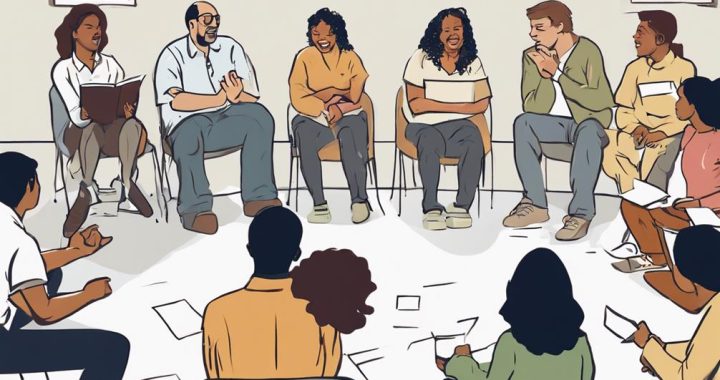
Embrace personal growth through transformative role-playing. Start with developing a Sissy Persona to explore new traits. Practice makeup techniques and fashion choices for Dressing and Grooming. Engage in Social Scenarios to hone communication skills. Improve Confidence and Posture with targeted exercises. Refine Speech and Language for clear communication. Work on Etiquette for refined social skills. Plunge into Task Role-Plays to enhance practical skills. Handle Criticism and Rejection scenarios gracefully. Manage Conflicting Emotions through immersive exercises. Gradually face Challenges to build resilience. Let these dynamic exercises guide you towards behavior modification and self-improvement.
Creating a Sissy Persona

To create a sissy persona effectively, begin by selecting specific traits and behaviors that align with the desired characterization. Embrace the concept of feminine empowerment by embodying qualities like grace, sensitivity, and nurturing.
Role-playing dynamics play a pivotal role in this process, allowing you to explore different aspects of your identity and facilitating psychological growth.
Delve into the domain of identity exploration by experimenting with various feminine attributes. Consider how traits such as empathy, creativity, and intuition can contribute to shaping your sissy persona.
By actively engaging in role-playing scenarios that emphasize these characteristics, you can cultivate a deeper understanding of your desired persona.
As you immerse yourself in this transformative experience, focus on the psychological growth that accompanies the development of your sissy persona. Embrace the opportunity to challenge traditional gender norms, expand your emotional range, and cultivate a heightened sense of self-awareness.
Through intentional practice and reflection, you can foster a sissy persona that not only reflects your innermost desires but also promotes personal growth and empowerment.
Dressing and Grooming Practice
Explore the practical aspects of embodying your sissy persona through dedicated dressing and grooming practice. Start by delving into makeup tutorials to learn how to enhance your features and express your femininity.
Experiment with different styles and colors to find what suits you best. Attend fashion shows or watch online to stay updated with current trends and gather inspiration for your outfits.
Next, focus on hair styling to complement your overall look. Try out various hairstyles that align with your sissy persona and practice until you feel confident in creating them effortlessly.
Additionally, establish a skincare routine tailored to your skin type to make sure a radiant and smooth complexion. Consistent care will help you maintain a healthy and glowing appearance, enhancing your feminine allure.
Social Interaction Scenarios
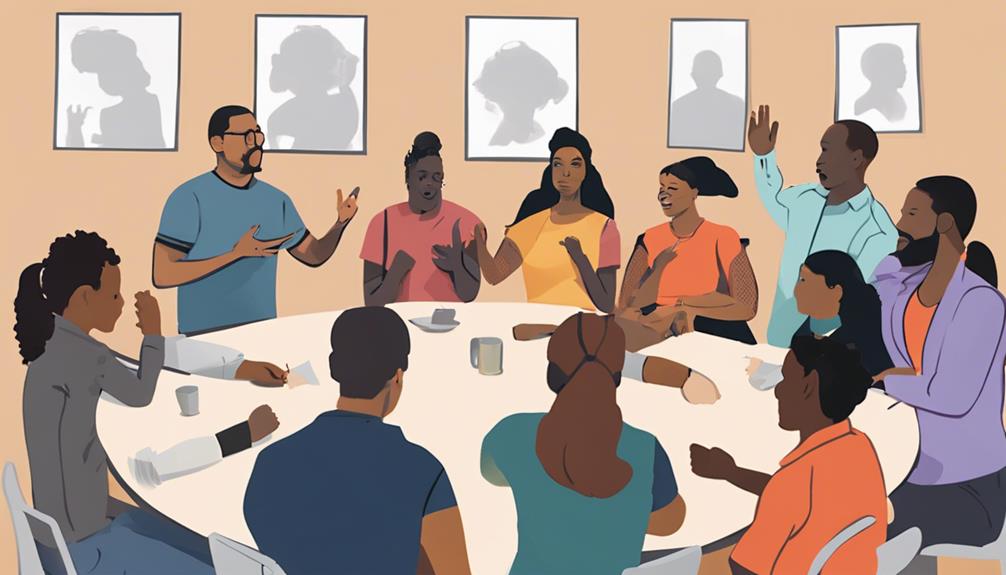
Engage in role-playing exercises that simulate social interaction scenarios to enhance your behavior modification skills. Improving communication and building relationships are key aspects of these exercises.
By stepping into different roles and practicing how to interact in various social situations, you can develop a better understanding of effective communication techniques and how to establish rapport with others.
To improve your communication skills, focus on active listening, maintaining eye contact, and using open body language. Role-playing scenarios where you must navigate conversations, resolve conflicts, or work through misunderstandings can help you become more adept at expressing yourself clearly and empathetically.
Building relationships through role-playing involves understanding social cues, practicing empathy, and learning how to adapt your communication style to different personalities.
These exercises provide a safe space to experiment with different approaches and receive feedback on your interactions.
Confidence and Posture Training
Enhance your behavior modification skills by focusing on improving your confidence and posture through targeted training exercises.
Body language plays a pivotal role in how others perceive you and how you perceive yourself. Start by practicing assertive body language: stand tall, make eye contact, and use open gestures to convey confidence. By consciously adjusting your posture, you can positively impact your self-image and empower yourself in various social interactions.
Engage in exercises that promote good posture, such as yoga or Pilates, to strengthen your core muscles and improve your overall stance. Additionally, mindfulness practices can help you become more aware of your body and its alignment, leading to a more assured appearance.
Speech and Language Development
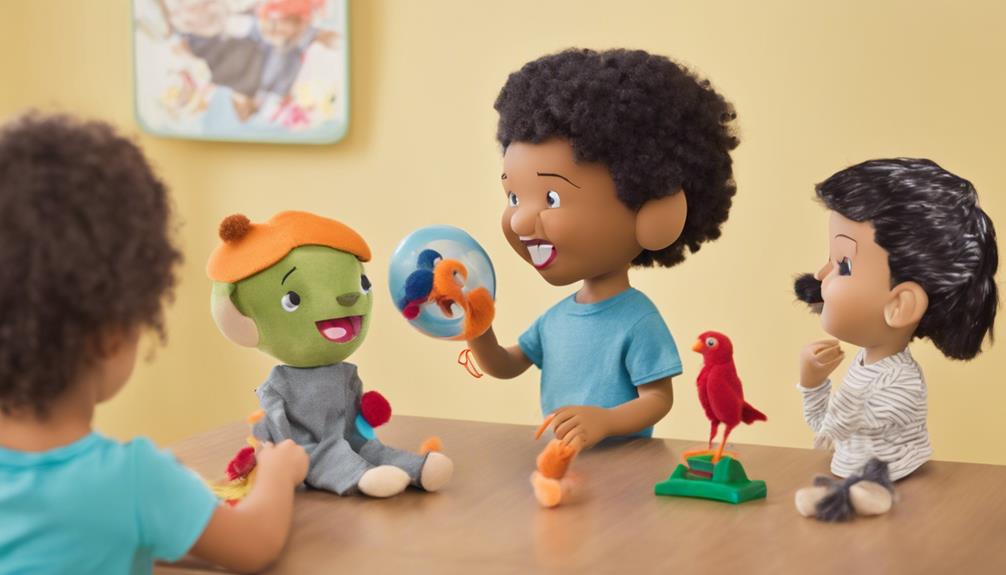
To improve behavior modification skills, focus on refining your speech and language development to effectively convey your message and intentions. Start by working on vocabulary building and conversation skills. Expand your lexicon by learning new words and their meanings. Engage in conversations with diverse individuals to enhance your communication abilities.
Next, practice articulation to guarantee clear and precise speech. Work on pronouncing words accurately and enunciating them properly. This will help you communicate your thoughts more effectively and be better understood by others.
Additionally, incorporate storytelling techniques into your communication style. Storytelling can make your message more engaging and memorable. Practice structuring narratives and delivering them with confidence to captivate your audience.
Etiquette and Mannerism Simulation
Practice simulating various etiquette and mannerism scenarios to refine your social skills and enhance your interpersonal interactions. Begin by focusing on table manners and formal greetings. Role-play scenarios where you're at a formal dinner or meeting new people to practice appropriate behavior. This includes using utensils correctly, sitting up straight, and offering polite greetings.
This will help you navigate social events with confidence and grace.
Move on to practicing professional conduct and public speaking. Simulate scenarios where you're in a professional setting, such as a job interview or a business meeting. Pay attention to your body language, tone of voice, and choice of words.
Practice introducing yourself confidently, maintaining eye contact, and speaking clearly and assertively. This will improve your professional image and help you communicate effectively in various situations.
Task and Chore Role-Plays
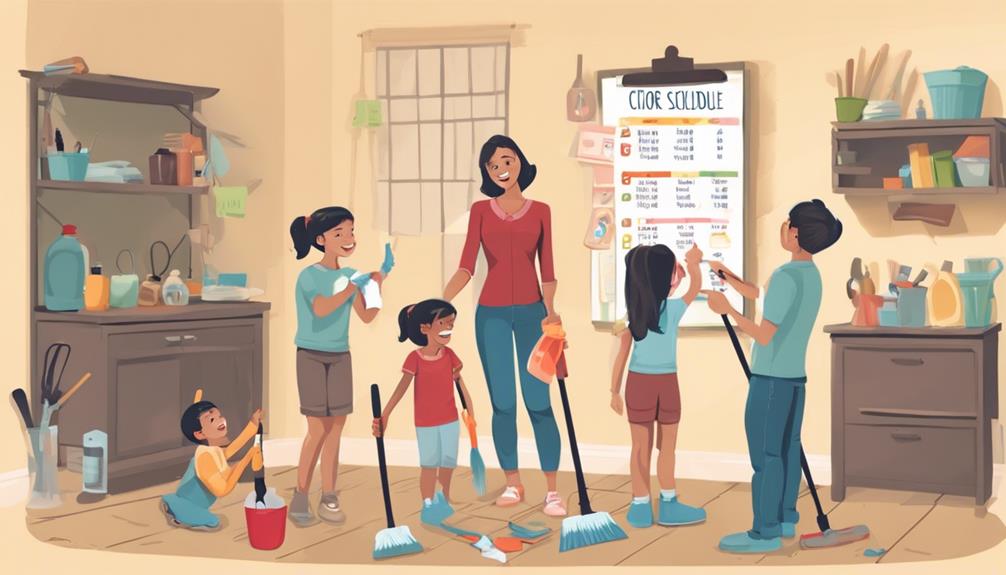
Engage in role-playing exercises that simulate tasks and chores to enhance your practical skills and reinforce responsible behavior. By acting out scenarios related to household responsibilities, you can develop better communication skills within your family or living environment. Practice delegating tasks, discussing schedules, and resolving conflicts effectively to improve your ability to work collaboratively.
Role-playing time management situations can help you become more efficient in completing chores and meeting deadlines. Set up scenarios where you need to prioritize tasks, create schedules, and stick to timelines to enhance your organizational skills and productivity.
Additionally, incorporating problem-solving role-plays into your routine can sharpen your ability to tackle challenges that arise during chores or responsibilities. Practice thinking on your feet, considering different solutions, and making decisions under pressure to become more adept at handling unexpected situations effectively.
Through task and chore role-plays focusing on household responsibilities, communication skills, time management, and problem-solving, you can cultivate practical skills that will benefit you in various aspects of your personal and professional life.
Handling Criticism and Rejection
How can you effectively handle criticism and rejection to improve your resilience and interpersonal skills?
Accepting feedback and managing emotions are pivotal steps in coping with disappointment and building resilience. When faced with criticism, try to see it as an opportunity for growth rather than a personal attack. Separate your emotions from the feedback and focus on the constructive aspects that can help you improve. Remember, everyone receives criticism at some point, and it's how you choose to respond that shapes your character.
To enhance your ability to handle rejection, practice self-awareness and self-compassion. Understand that rejection is a natural part of life and doesn't define your worth. Instead of dwelling on the rejection, reflect on what you can learn from the experience and how you can grow stronger from it. Developing a positive mindset and seeking support from friends or mentors can also aid in overcoming rejection.
Dealing With Conflicting Emotions
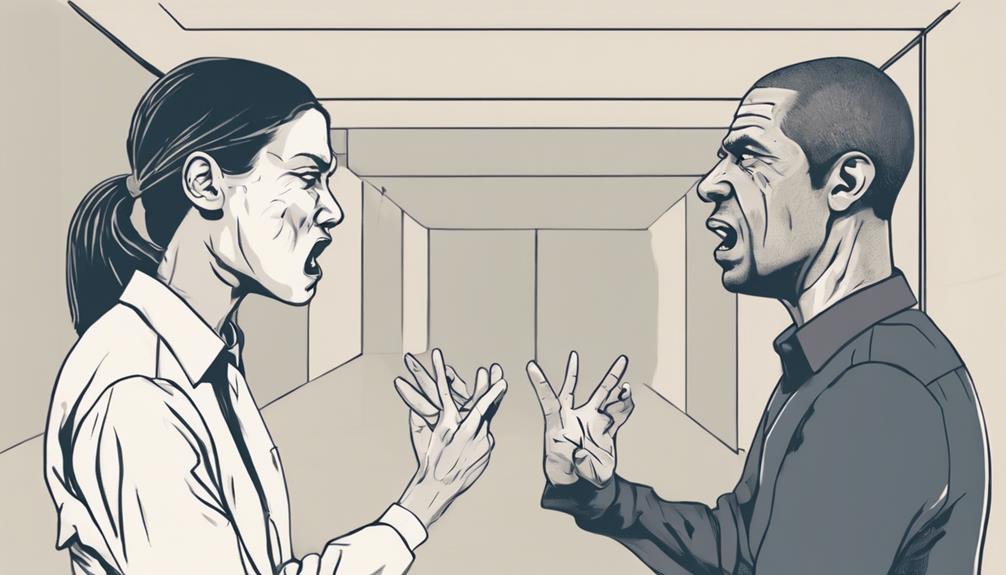
Managing conflicting emotions requires acknowledging and actively addressing the internal discord you may experience. When faced with conflicting emotions, it's essential to utilize coping strategies and practice emotional regulation to navigate through these challenging situations effectively.
Start by identifying and acknowledging the specific emotions you're feeling, understanding their roots, and recognizing how they may be in conflict with each other.
To manage conflicting emotions successfully, engage in stress management techniques such as deep breathing exercises, mindfulness, or physical activity to help regulate your emotional responses. Additionally, incorporating self-care practices like maintaining a healthy routine, getting enough rest, and seeking support from loved ones can also aid in balancing conflicting feelings.
Remember that emotional regulation is a skill that can be developed over time through practice and self-awareness. By actively implementing coping strategies, stress management techniques, and self-care practices, you can enhance your ability to navigate conflicting emotions in a healthy and constructive manner.
Gradual Exposure to Challenges
Start by gradually exposing yourself to challenges that push your boundaries and encourage growth in areas where you may feel discomfort or resistance. This gradual exposure is key to anxiety management and fear desensitization.
Begin with smaller challenges that slightly exceed your comfort zone and progressively increase the difficulty as you become more comfortable. This approach helps build stress tolerance and self-control techniques.
When facing these challenges, focus on your reactions and emotions. By acknowledging your feelings and understanding how they affect your behavior, you can develop better self-control techniques.
Practice mindfulness to stay present and calm during these challenges, allowing yourself to observe your reactions without judgment. This self-awareness will help you identify triggers and patterns that lead to stress or anxiety.
Frequently Asked Questions
How Can Role-Playing Exercises Improve Self-Awareness and Emotional Intelligence?
Engage in role-playing exercises to enhance self-awareness through self-reflection and boost emotional intelligence by practicing empathy-building scenarios. By immersing yourself in diverse roles, you'll develop a deeper understanding of your own emotions and those of others.
Are There Any Potential Negative Effects of Role-Playing for Behavior Modification?
When using role-playing for behavior modification, consider ethical considerations to guarantee participants' well-being. Be mindful of potential negative impacts on relationships, as intense scenarios can lead to emotional strain. Prioritize safety and support throughout the process.
Can Role-Playing Exercises Be Used to Address Specific Phobias or Fears?
Yes, role-playing exercises can effectively address specific phobias or fears through exposure therapy and desensitization. By simulating anxious or social situations, individuals can gradually confront and overcome their fears in a controlled environment.
Is There a Recommended Frequency for Practicing Role-Playing Exercises?
For role-playing consistency, practice regularly. The benefits of practice depend on frequency. More frequent sessions can lead to quicker behavior changes. Aim for consistent role-playing to maximize impact on modifying behaviors effectively.
How Can Role-Playing Be Adapted for Different Age Groups or Populations?
To adapt role-playing for different ages or populations, consider age-appropriate adjustments and specific approaches for diverse groups. Vary settings to enhance engagement and tailor scenarios to match the demographic's experiences and challenges for effective behavior modification.
Conclusion
To sum up, these 10 role-playing exercises offer a practical and effective way to modify behavior and develop new skills. By actively engaging in scenarios that challenge you to step outside your comfort zone, you can work towards personal growth and self-improvement.
Remember to approach each exercise with an open mind and willingness to learn from the experience. Stay committed to the process, and you'll see positive changes in your behavior and mindset over time.
Keep pushing yourself to be the best version of yourself.